

When people think of Ireland they picture cliffs, wind-swept meadows, low skies and castles. Gardens come less readily to mind. Yet Ireland’s secret gardens are among the most interesting expressions of the Irish landscape, especially for anyone seeking a botanical journey away from the busiest routes.
The island’s mild, humid climate, shaped by the Gulf Stream, creates ideal conditions for surprising vegetation. Subtropical plants grow alongside native species; ancient trees alternate with borders trimmed with almost English precision. But botany alone does not explain the difference. Context does.
Many historic gardens in Ireland are tied to private homes, aristocratic residences or families who have cared for them for generations. Some open only at certain times of year. Others are visited by appointment. That is where the idea of the “secret garden” comes from: not so much hidden as little known to mainstream tourism.
One of the most emblematic places is Powerscourt Gardens, in County Wicklow.


Powerscourt is not unknown, but it is often visited superficially. In reality it is one of the finest examples of a historic garden in Ireland, with Italian-style terraces, perspective views towards the Wicklow Mountains and a waterfall among the highest on the island. Here the Irish landscape dialogues with a formal continental layout. It is not just a park: it is a precise landscape project, layered over time.
Very different, more intimate and less crowded, is Mount Usher Gardens, also in Wicklow.
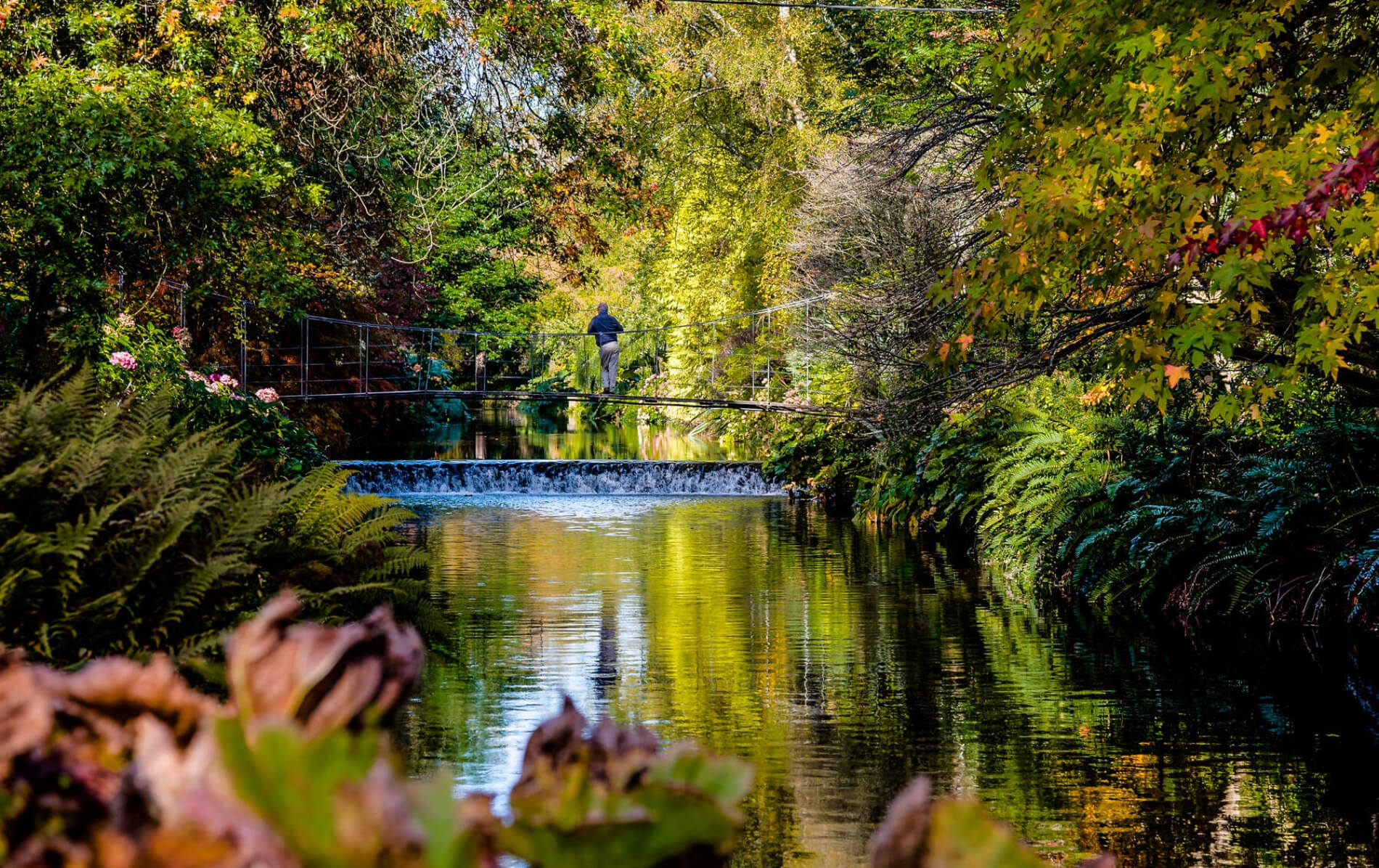

Mount Usher is considered one of the finest “Robinsonian” gardens, inspired by William Robinson’s philosophy, which favoured naturalness and integration with the landscape. There are no rigid geometries. The garden follows the River Vartry, developing in an apparently spontaneous way that is in fact the result of careful design. It is one of those secret gardens in Ireland that surprises precisely because it avoids theatricality.
Further west, in County Kerry, you come to Derreen Garden.

Derreen is a subtropical garden overlooking the Atlantic. Rhododendrons, camellias, magnolias and plants from the southern hemisphere thrive thanks to the microclimate created by the coastal setting. Walking the paths you alternate panoramic openings and more enclosed areas. It is a clear example of how a botanical journey in Ireland can offer unexpected variety.
In the south of the island, near Cork, you find Bantry House and Garden.

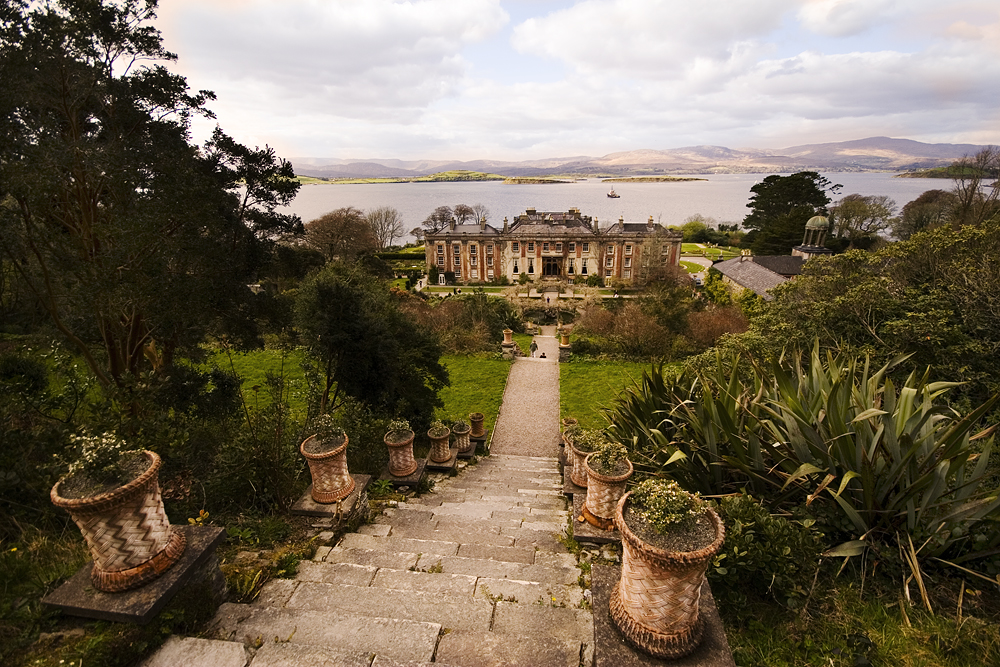
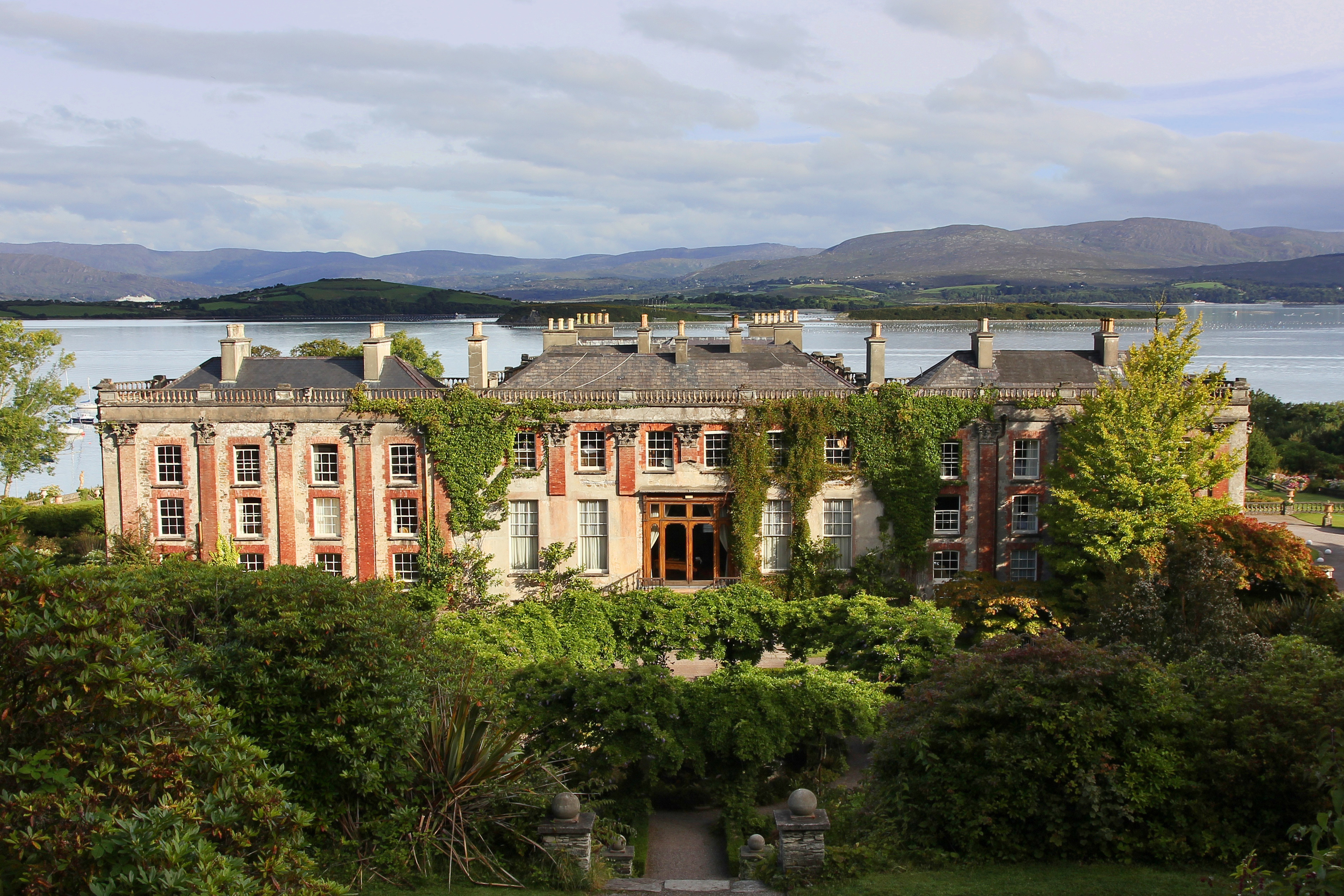
Here the garden unfolds in terraces overlooking Bantry Bay. Monumental steps, statues and parterres tell of European influence on the Irish landscape of the eighteenth and nineteenth centuries. It is a place that unites architecture and nature without scenic excess.
Further north, Hunting Brook Gardens is worth mentioning, a true example of a private garden that has evolved over time.


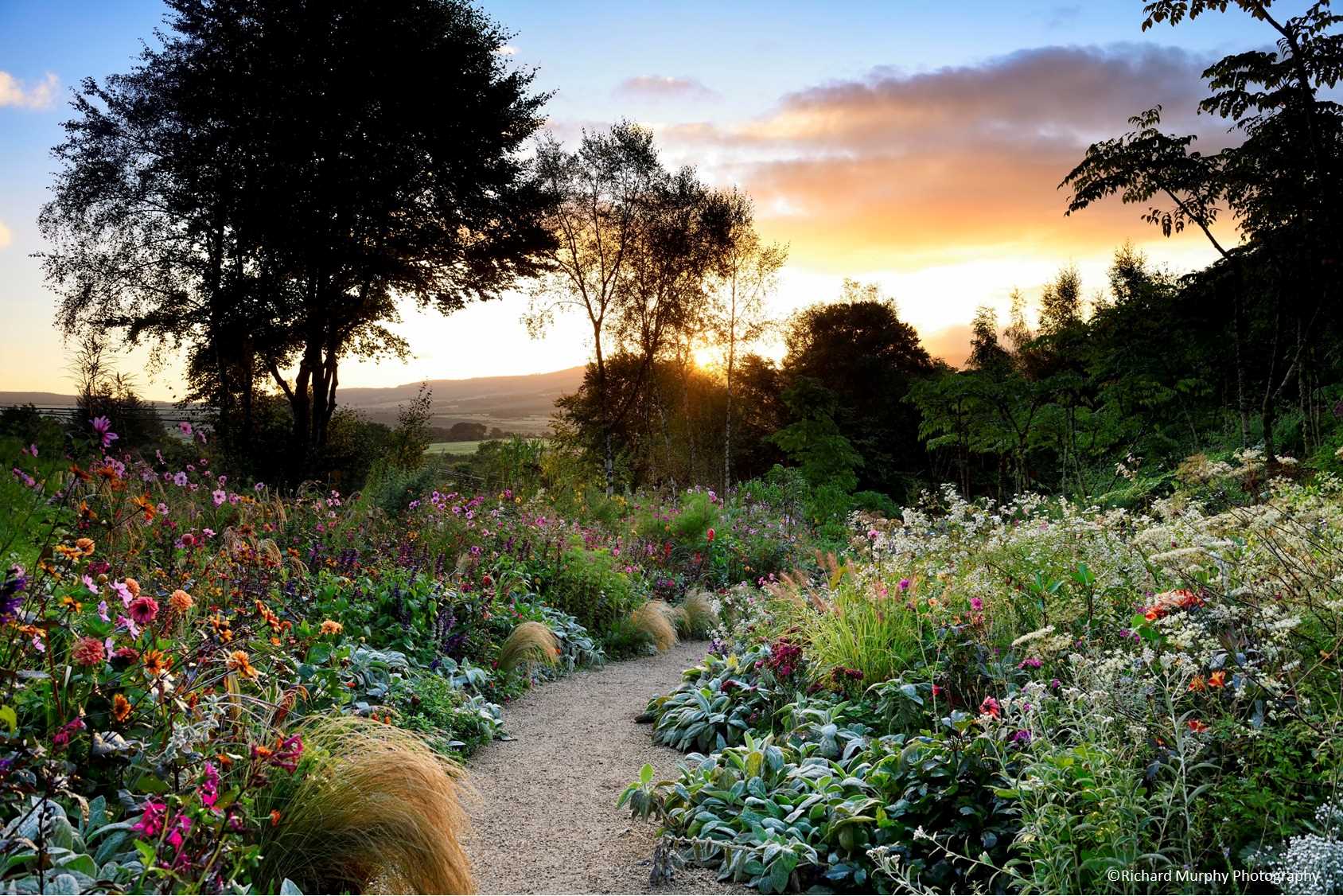
Hunting Brook began as a family garden and over the years became a reference point for plant enthusiasts. Here you sense the personal dimension of the project: not a monumental park, but a place built with consistency, season after season.
You can visit Ireland’s secret gardens on your own. But that often means seeing only the surface. Many of these places carry stories of economic change, agricultural crises, climate shifts and changes of ownership. A guided garden tour in Ireland lets you read those layers.
There is another element to consider. Irish gardens are not only botany. They are cultural landscape. The bond between house, farmland and garden is very strong. Understanding that balance helps you grasp the island’s social history too.
A botanical journey in Ireland, especially when built around selected stops, lets you alternate major parks with lesser-known gardens, guided visits with time for quiet observation. It is not about collecting tickets, but about giving continuity to the story of the landscape.
Those who seek secret gardens in Ireland usually do not want crowded attractions. They want silence, light, open space and details to observe calmly. In that sense Ireland offers far more than you might imagine.
Green here is not only colour. It is the structure of the territory. It is memory. It is everyday work. And it is that combination that makes historic Irish gardens an appealing destination for travellers who want quality cultural journeys.


